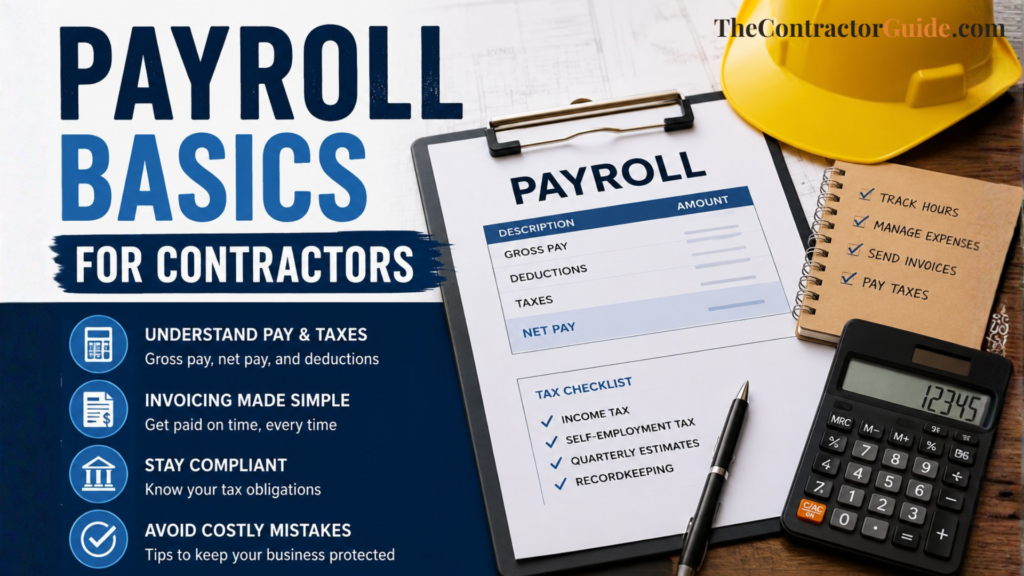
Understanding payroll basics is crucial for you as a contractor. You’ll need to navigate key terms like gross pay, net pay, and deductions. Accurately calculating your earnings and tax withholdings can make a significant difference in your financial management. Plus, tracking your hours and managing invoices is essential for timely payments. Let’s explore how mastering these elements can enhance your business and build trust with clients. What are the common pitfalls you should avoid?
Learn Payroll Basics for Contractors
When you’re stepping into the world of contracting, understanding payroll basics is essential to keeping your business running smoothly. You’ll need to familiarize yourself with essential terms like gross pay, net pay, and deductions.
Knowing how to calculate your earnings and what gets withheld for taxes can save you from unexpected surprises. It’s also crucial to track your hours and manage invoicing effectively.
You might want to consider software that simplifies these processes, allowing you to focus on what you do best. Building a solid understanding of payroll not only helps you comply with regulations but also fosters trust with your clients.
Ultimately, mastering these basics strengthens your position in the contracting community, helping you feel more connected and confident.
Key Differences Between Contractors and Employees
Understanding the key differences between contractors and employees is crucial for anyone navigating the workforce. As a contractor, you typically have more flexibility in how and when you work, allowing you to choose projects that resonate with you. You’re often responsible for your own tools and expenses, which can provide a sense of independence.
In contrast, employees usually receive a steady paycheck, benefits, and often have a more structured work environment. Companies typically dictate their schedules and tasks, fostering a sense of belonging within a team.
While both roles contribute significantly to a business, recognizing these differences helps you make informed choices about your career path and work style, ultimately shaping your professional journey.
Essential Tax Obligations for Contractors
As a contractor, understanding your tax obligations is crucial for your business’s financial health.
You need to be aware of your liabilities and the key filing deadlines to avoid penalties.
Let’s break down what you need to know to stay compliant and keep your finances in order.
Understanding Contractor Tax Liabilities
While navigating the world of contracting, it’s crucial to grasp your tax liabilities to avoid unexpected financial pitfalls.
As a contractor, you’re typically considered self-employed, meaning you’re responsible for paying your own taxes. This includes federal income tax, self-employment tax, and potentially state and local taxes, depending on where you operate.
You’ll need to estimate your tax payments quarterly, and keeping accurate records of your income and expenses is vital.
Familiarize yourself with deductions available to contractors, like home office expenses and business-related costs. Understanding these obligations isn’t just about compliance; it’s about managing your finances wisely.
Connect with other contractors to share insights and strategies, creating a supportive network as you navigate your tax responsibilities.
Key Filing Deadlines Explained
Keeping track of key filing deadlines is vital for staying compliant and avoiding penalties. As a contractor, you share the responsibility of managing your tax obligations.
Here are some crucial dates you shouldn’t overlook:
- Quarterly Estimated Taxes: Due on April 15, June 15, September 15, and January 15.
- W-2 Forms for Employees: Must be mailed by January 31.
- 1099 Forms for Contractors: Also due by January 31.
- Annual Tax Return: Typically due on April 15.
- Payroll Taxes: Due quarterly, usually on the last day of the month following the quarter.
Staying organized and aware of these deadlines helps you feel more in control and part of a community that values compliance.
You’re not alone in this!
Choosing Your Payment Methods
How do you choose the best payment method for your contracting work? Start by considering what feels right for you and your clients. Options like checks, direct deposits, and digital payment platforms each have their pros and cons.
Think about convenience—digital methods can speed things up, while checks might feel more traditional and secure.
Also, consider your clients’ preferences; meeting them halfway can strengthen your relationships. Transparency is key, so clearly communicate your chosen method upfront.
Setting Up a Simple Invoicing System
A simple invoicing system can streamline your contracting work and ensure you get paid promptly. Here’s how to set it up effectively:
- Choose your invoicing tool: Whether it’s software or a template, pick what suits you best.
- Create a consistent format: Use a layout that’s easy to read and professional.
- Set clear payment terms: Make sure your clients know when payments are due.
- Automate reminders: Follow up with gentle reminders to keep cash flow steady.
- Keep records organized: Store invoices in a way that’s easy to access for future reference.
What to Include in Your Invoices
Once you’ve set up a simple invoicing system, the next step is to ensure your invoices contain all the necessary details. Start with your business name and contact information, followed by your client’s name and address. Clearly state the invoice number and date to keep things organized.
List the services provided, including descriptions, quantities, and rates. Don’t forget to add any applicable taxes.
It’s also wise to outline payment terms, like due dates and accepted payment methods.
Lastly, consider a friendly note of appreciation to strengthen your relationship. By including these elements, you make it easier for clients to process payments promptly, fostering a sense of trust and professionalism that keeps them coming back.
Effectively Tracking Income and Expenses
To keep your finances in check, you need to track both your income sources and your expenses meticulously.
Regularly documenting these can help you spot trends and make informed decisions.
Let’s explore effective ways to manage these records.
Documenting Income Sources
While managing your finances as a contractor, effectively tracking income and expenses is crucial for maintaining a clear financial picture. Documenting your income sources helps you understand where your money’s coming from and ensures you stay organized.
Here are some tips to help you stay on top of it:
- Use accounting software to log income transactions.
- Keep invoices and receipts organized by client or project.
- Track payments received and outstanding balances.
- Regularly review your income reports for accuracy.
- Set aside time each month to reconcile your records.
Managing Expense Records
Managing expense records is just as crucial as tracking your income. When you keep a close eye on your expenses, you empower yourself to make informed decisions about your business.
Start by organizing your receipts and invoices—consider using apps or spreadsheets that simplify this process. Categorizing your expenses helps you identify patterns and areas where you can cut costs.
Remember to regularly update your records; setting a weekly or monthly schedule can keep you on track. Don’t forget to save digital copies for backup.
This way, you’ll always have a clear picture of your financial health, ensuring you’re ready for tax time and future opportunities. By staying organized, you foster a sense of security in your financial journey.
Importance of Accurate Record-Keeping
Accurate record-keeping isn’t just a good practice; it’s essential for contractors who want to stay compliant and financially sound.
When you keep detailed records, you help your business thrive and build trust with your clients. Here’s why it matters:
- It ensures compliance with tax regulations.
- It helps you track project costs and profitability.
- It makes it easier to resolve disputes with clients.
- It provides insights for future projects and budgeting.
- It simplifies the payroll process for your team.
Tips for Managing Client Payments
Keeping detailed records not only supports compliance but also lays the groundwork for efficient client payment management.
Start by setting clear payment terms upfront. Make sure your clients know when invoices are due and what methods you accept.
Don’t hesitate to follow up on late payments; a gentle reminder can go a long way.
Utilize invoicing software to streamline the process and keep everything organized.
Consider offering incentives for early payments or discounts for larger projects; this builds trust and encourages timely transactions.
Lastly, maintain open communication with your clients. When they feel connected, they’re more likely to prioritize your payments.
Understanding 1099 Forms and Their Requirements
These forms are crucial for reporting income from clients, and understanding their requirements can save you headaches down the line.
Here’s what you need to know:
- A 1099-MISC or 1099-NEC is used for reporting non-employee compensation.
- You must issue a 1099 if you pay a contractor $600 or more in a year.
- Ensure you have the contractor’s correct Tax Identification Number (TIN).
- Send the forms to contractors by January 31.
- Keep copies for your records to stay organized.
How to Handle Payroll Taxes as a Contractor
As a contractor, understanding payroll taxes is crucial for staying compliant and avoiding penalties.
You’ll need to grasp tax classifications, make estimated tax payments, and keep accurate records.
Let’s break down these essentials to ensure you’re on the right track.
Understanding Tax Classifications
Understanding tax classifications is crucial for contractors navigating payroll taxes, especially since your tax obligations can differ significantly from those of traditional employees.
Knowing where you fit in helps you stay compliant and avoid surprises. Here are key classifications you should recognize:
- Independent Contractor: You’re responsible for your own taxes.
- Employee: Your employer withholds taxes and pays part of your Social Security and Medicare.
- Sole Proprietor: You report profits and losses directly on your personal tax return.
- LLC: Offers flexibility in tax treatment depending on your choices.
- S-Corp: Can provide tax advantages but requires careful compliance.
Understanding these distinctions can empower you as a contractor, helping you make informed decisions for your business.
You’re not alone in this journey!
Estimated Tax Payments
How do you manage estimated tax payments as a contractor? First, you need to estimate your annual income and calculate your expected tax liability. This helps you determine how much to pay quarterly, usually due in April, June, September, and January.
Use IRS Form 1040-ES to make the process easier and keep track of your payments. If your income fluctuates, adjust your payments accordingly to avoid underpayment penalties.
Remember, you’re not alone in this—many contractors face similar challenges. Staying organized and proactive can help you feel more secure about your financial obligations.
Record Keeping Essentials
Managing your estimated tax payments sets the stage for effective record keeping.
As a contractor, you’ll want to stay organized to simplify your payroll tax handling. Here are some essentials to keep in mind:
- Track all income and expenses regularly.
- Keep copies of invoices and receipts.
- Maintain a separate bank account for business transactions.
- Use accounting software to streamline your records.
- Review your records quarterly to stay on top of taxes.
Top Payroll Mistakes Contractors Make and How to Avoid Them
While navigating the complexities of payroll, contractors often stumble into common pitfalls that can lead to costly mistakes. One major misstep is misclassifying employees as independent contractors, which can result in hefty fines.
Another mistake? Failing to keep accurate records of hours worked, leading to disputes and unhappy team members. Don’t forget about tax deadlines; late payments can incur penalties that strain your budget.
Moreover, skipping benefits like workers’ comp can leave you vulnerable. To avoid these issues, always double-check classifications, maintain thorough records, and stay on top of tax obligations.
Essential Payroll and Tax Resources for Contractors
To ensure your payroll processes run smoothly, it’s crucial to tap into the right resources tailored for contractors. By leveraging these tools, you can simplify your payroll tasks and stay compliant with tax regulations.
Here are some essential resources you shouldn’t overlook:
- IRS Publications: Familiarize yourself with tax obligations.
- Payroll Software: Invest in user-friendly software designed for contractors.
- State Labor Departments: Stay updated on local regulations and requirements.
- Industry Associations: Join groups that offer networking and payroll guidance.
- Online Forums: Engage with fellow contractors to share tips and experiences.
Using these resources, you’ll feel more confident in managing payroll and taxes, building a solid foundation for your contracting business.
When to Hire a Payroll Service?
With the right resources at your disposal, you might still wonder when it’s time to bring in a payroll service. If you find yourself spending too much time on payroll tasks, it’s a sign you could use help.
Remember, your focus should be on growing your business, not getting lost in paperwork. If you’re experiencing payroll errors or struggling to keep up with tax obligations, hiring a service can ease your stress and ensure accuracy.
Plus, as your team grows, managing payroll in-house can become overwhelming. Bringing in a payroll service not only simplifies your processes but also connects you with experts who understand your needs.
It’s about building a stronger foundation for your business and giving you peace of mind.
Staying Updated on Payroll Regulations and Changes
Staying informed about payroll regulations and changes is crucial for avoiding costly mistakes. As a contractor, you want to ensure you’re compliant and up-to-date.
Here are some practical ways to keep yourself in the loop:
- Subscribe to industry newsletters for the latest updates.
- Join professional associations that offer resources and training.
- Attend webinars and workshops focused on payroll management.
- Follow government websites for official announcements.
- Network with fellow contractors to share insights and experiences.
Conclusion
In the world of contracting, “a stitch in time saves nine.” By mastering payroll basics, you not only ensure accurate payments but also build trust with your clients. Keep track of your hours, understand your tax obligations, and utilize efficient invoicing systems. Avoid common pitfalls by staying informed and proactive. With the right tools and knowledge, you’ll streamline your payroll process, allowing you to focus on what you do best—growing your business.