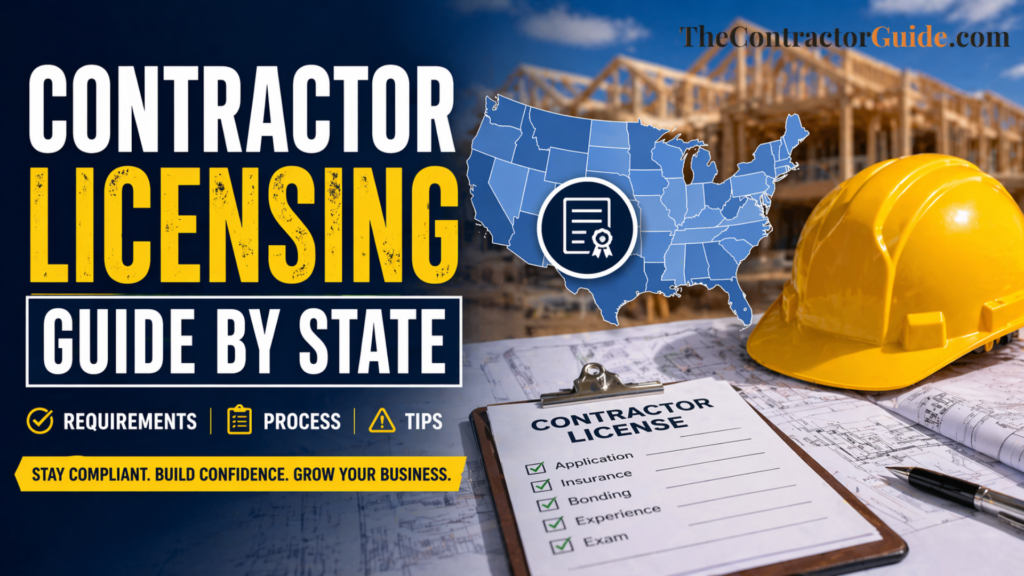
Navigating contractor licensing can feel overwhelming at first—but once you understand how it works, it becomes a clear, structured process. Every state has its own rules, requirements, and expectations, and knowing how to navigate them is what separates compliant contractors from those constantly running into delays.
This guide walks you through contractor licensing in a practical way—what it is, why it matters, and how to get licensed without costly mistakes.
What Contractor Licensing Really Means
Contractor licensing exists to set a standard. It ensures that anyone performing construction work meets a baseline level of skill, safety knowledge, and professionalism.
When you’re licensed, you’re not just meeting a legal requirement—you’re signaling to clients and general contractors that you’re qualified, accountable, and operating legitimately. That trust becomes a major advantage when bidding on projects.
If you’re unsure where to start, you can explore industry guidance through the National Association of Home Builders
Federal vs. State Requirements (What Actually Applies to You)
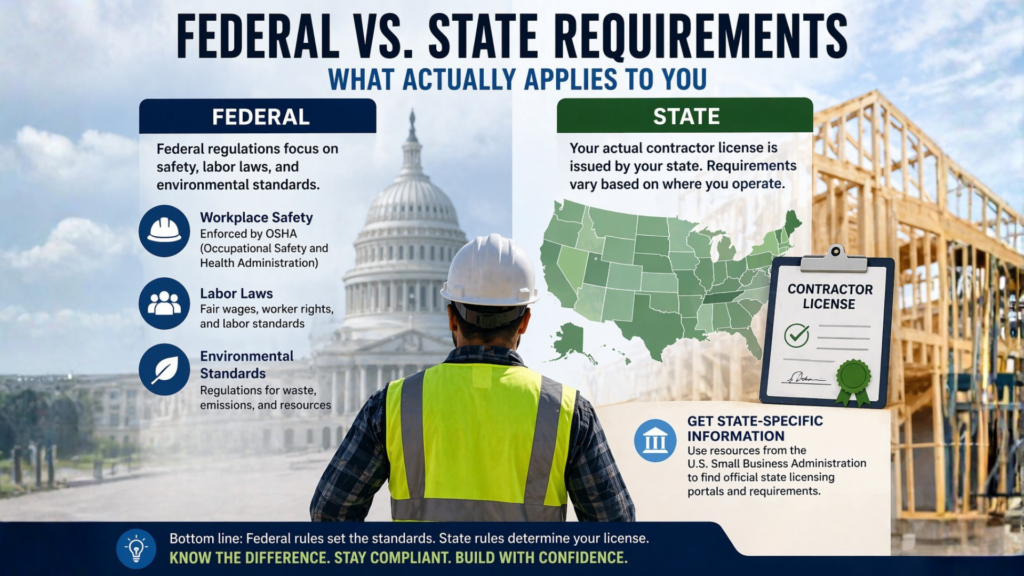
One of the most common misconceptions is that contractor licensing is handled at the federal level. In reality, most licensing happens at the state level.
Federal regulations focus more on safety, labor laws, and environmental standards—often enforced through agencies like OSHA (Occupational Safety and Health Administration).
Your actual license is issued by your state, which means requirements can vary significantly depending on where you operate.
To better understand your state-specific requirements, you can use resources from the U.S. Small Business Administration, which links to official state licensing portals.
How to Figure Out Which License You Need
Before applying, you need clarity on one thing: what type of work you’re doing.
Different trades require different licenses. A general contractor license is not the same as an electrical, plumbing, or specialty license. Many states also break licenses down by project size or scope.
The best approach is simple: define your scope of work clearly, then verify requirements directly through your state’s licensing board.
Skipping this step is one of the fastest ways to delay your approval.
The Step-by-Step Licensing Process
While each state differs slightly, the overall process tends to follow the same structure.
First, confirm eligibility. This usually includes meeting age requirements, demonstrating experience, and sometimes completing training.
Next comes the application. You’ll submit documentation, pay fees, and in many cases, pass an exam covering building codes, safety, and business practices.
For preparation, you can explore training and resources from Associated General Contractors of America.
Once approved, you’re officially licensed—but maintaining that status requires ongoing compliance.
Insurance and Licensing Go Hand-in-Hand
One of the most overlooked parts of licensing is insurance.
Most states require proof of coverage before issuing a license. This typically includes general liability, and sometimes workers’ compensation depending on your structure.
Beyond compliance, the right insurance protects your business and keeps you eligible for projects.
Working with a specialist like Affordable Contractors Insurance helps ensure your policy is structured correctly from the start.
If you’re applying for a license or reviewing your current setup, you can request a contractor insurance quote here
Common Mistakes That Delay Approval
Most licensing delays come down to simple, avoidable mistakes.
Incomplete applications are a major issue. Missing documents or incorrect details can slow the process significantly.
Another common problem is misunderstanding state requirements. Because rules vary widely, assuming the process is the same everywhere can lead to rejection.
Background checks are another area where contractors run into trouble. Transparency matters—failing to disclose required information can result in denial.
Taking the time to get it right upfront saves you weeks—or even months—of delays.
Renewals, Compliance, and Staying Licensed
Getting licensed is just the first step. Staying licensed requires consistency.
Most states require periodic renewal, which may include continuing education, updated documentation, and fees. Missing deadlines can lead to penalties or suspension.
Staying connected with your licensing board and industry groups helps you stay ahead of these requirements—and avoid unnecessary setbacks.
Final Takeaway
Contractor licensing isn’t just paperwork—it’s the foundation of a legitimate, scalable business.
When done right, it builds trust, opens doors to better projects, and positions you as a professional in your market.
Take the time to understand your state’s requirements, prepare properly, and align your insurance with your licensing needs.
Because the contractors who grow consistently aren’t just skilled—they’re structured, compliant, and built to operate at a higher level.