
Contractor insurance is one of the first real “business” decisions you make—and one of the most misunderstood.
For many contractors just starting out, it feels like a box to check. Get a policy, show proof, move on. But insurance plays a much bigger role than that. It protects your finances, keeps you compliant, and—more importantly—determines whether you can actually take on certain jobs.
This guide breaks down contractor insurance in a simple, practical way so you understand what you need, why it matters, and how to avoid the common mistakes that cost contractors time and money.
Why Contractor Insurance Matters More Than You Think
At its core, contractor insurance protects you from the unexpected. Job site accidents, property damage, or injuries can happen even on well-managed projects. Without coverage, a single incident can turn into a major financial setback.
But beyond protection, insurance is also about credibility. Clients, general contractors, and project owners want to know they’re working with someone reliable. Having the right coverage shows that you take your business seriously and can meet professional standards.
As your business grows, insurance stops being just protection—it becomes part of how you operate. Contracts begin to require specific coverage, and your policy needs to align with real-world risks, not just basic requirements.
The Core Types of Contractor Insurance
Most contractors start with general liability insurance, and for good reason. It covers third-party injuries and property damage, which are some of the most common risks on a job site. This is typically the baseline required to even step onto a project.
Workers’ compensation is another essential piece. If you have employees, this coverage protects both you and your team by covering medical costs and lost wages in the event of a work-related injury. In many states, it’s not optional—it’s required.
As your work expands, additional coverages start to matter. Policies like inland marine protect your tools and equipment, while builder’s risk insurance covers materials and work in progress on active projects. These aren’t always required early on, but they become critical as projects increase in size and complexity.
How Your Insurance Needs Change as You Grow
A contractor doing small residential jobs has very different risks compared to a contractor managing large commercial projects.
Early on, your focus is usually on meeting minimum requirements and keeping costs manageable. But as your revenue increases and you take on bigger jobs, expectations change. Contracts may require higher limits, specific endorsements, or proof that your coverage matches the scope of work exactly.
This is where many contractors run into issues. They technically have insurance—but it doesn’t align with what the project requires. That’s when certificates get rejected, projects get delayed, or opportunities are lost entirely.
Working with a specialist like Affordable Contractors Insurance helps bridge that gap by structuring coverage around how your business actually operates, not just selling a standard policy.
Common Risks Contractors Face
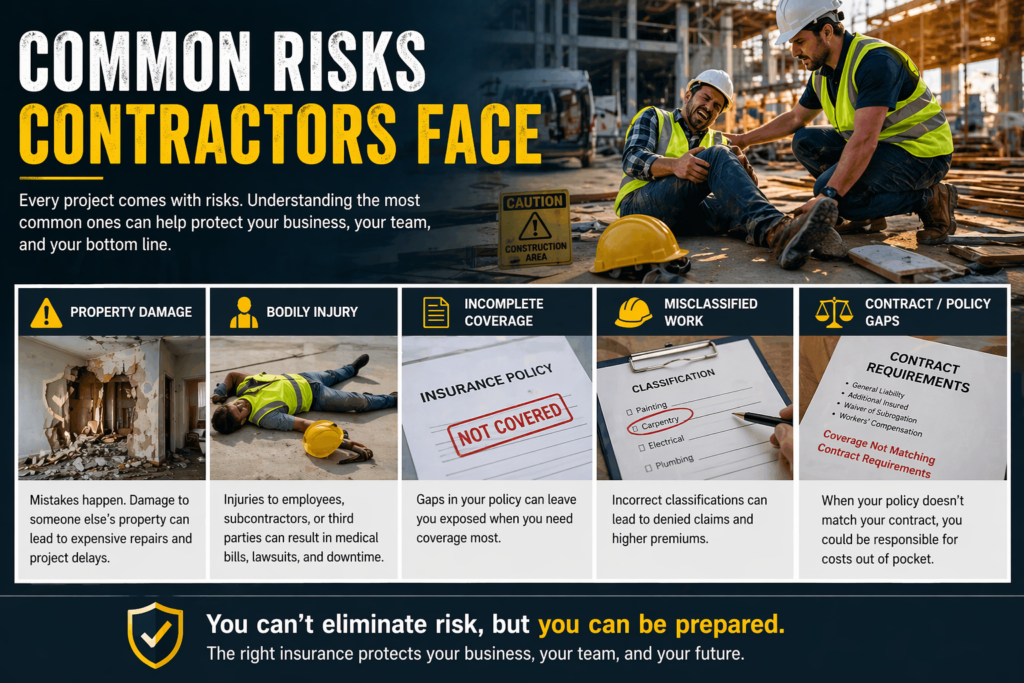
Every contractor faces some level of risk, but a few show up consistently across the industry.
Property damage is one of the most common. Even a small mistake can lead to costly repairs and strained client relationships. Bodily injury is another major concern, whether it involves a worker, a subcontractor, or a third party on site.
There are also less obvious risks. Issues like incomplete coverage, misclassified work, or gaps between what your policy covers and what your contract requires can create problems long before a claim ever happens.
In many cases, the biggest risk isn’t the accident itself—it’s being unprepared for it.
Subcontractors and Hidden Liability
If you work with subcontractors, your exposure increases significantly.
Many contractors assume that if a subcontractor has insurance, they’re covered. That’s not always true. If the subcontractor’s policy is insufficient or improperly structured, liability can fall back on you.
That’s why verifying subcontractor insurance is critical. It’s not just about checking a certificate—it’s about making sure their coverage actually meets the requirements of the project and protects your business.
Managing Costs Without Cutting Corners
Insurance is a necessary expense, but it doesn’t have to be excessive.
One of the most effective ways to control costs is making sure your policy accurately reflects your work. Many contractors overpay because they’re classified for risks they don’t actually take on.
Keeping a clean claims history also plays a major role. Fewer claims generally mean lower premiums over time. Comparing policies, reviewing coverage regularly, and adjusting as your business evolves can all help you stay protected without overspending.
Choosing the Right Policy
Not all insurance policies are created equal. Two contractors can have similar coverage on paper but completely different levels of protection in practice.
The key is understanding what your policy includes—and what it doesn’t. Exclusions, limitations, and missing endorsements can create gaps that only show up when it’s too late.
Taking the time to review your coverage and ask questions is one of the smartest things you can do as a contractor.
Final Thoughts
Contractor insurance isn’t just about avoiding risk—it’s about building a stable, professional business.
When you understand your coverage and structure it properly, it becomes a tool. It helps you win jobs, meet requirements, and operate with confidence.
Whether you’re just starting out or beginning to scale, getting your insurance right early will save you time, money, and frustration down the line.