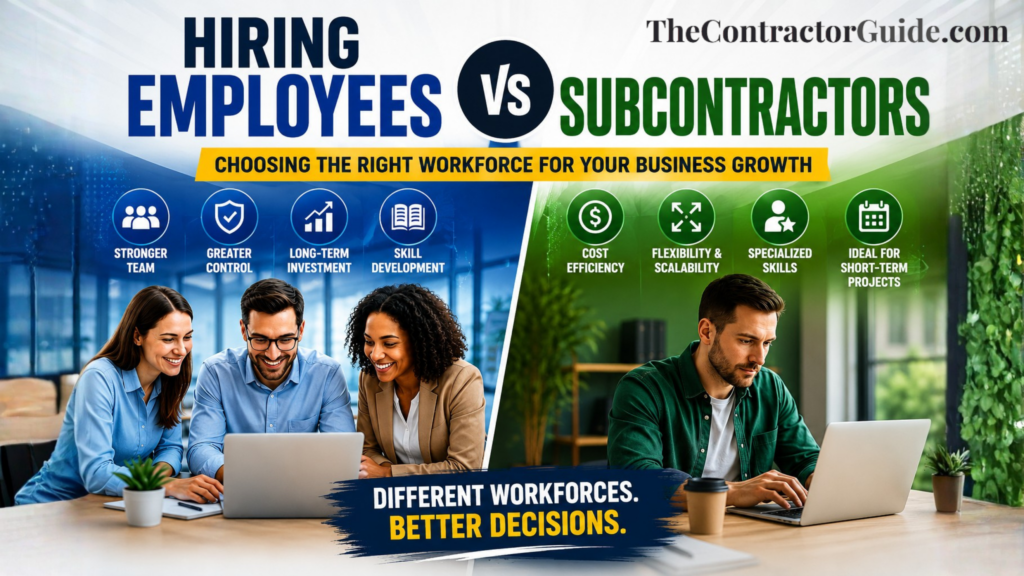
You might not realize that the choice between hiring employees and subcontractors can significantly impact your business’s culture and efficiency. While one option may seem more cost-effective, it often comes with hidden costs and long-term implications. Understanding the nuances of each approach is essential for aligning your workforce strategy with your goals. What factors should you consider to make the best decision for your organization?
How to Choose Between Employees and Subcontractors
How do you decide whether to hire employees or subcontractors? It starts with understanding your business needs.
If you need consistent, long-term commitment, employees might be the way to go. They can build a strong company culture and foster teamwork, creating a sense of belonging.
On the other hand, if your projects are temporary or specialized, subcontractors offer flexibility. They allow you to tap into diverse expertise without the overhead of full-time staff.
Consider your budget, workload, and the skills required. Think about how much control you want over the work process.
Ultimately, the right choice aligns with your vision and helps you build a supportive environment that encourages collaboration and growth, whether through employees or subcontractors.
Benefits of Hiring Employees for Your Business
When you hire employees, you strengthen team cohesion, creating a more unified workforce.
You’ll also have greater control over work quality, ensuring your standards are consistently met.
Plus, investing in employees often pays off in the long run, fostering loyalty and stability in your business.
Enhanced Team Cohesion
While you might consider subcontractors for flexibility, hiring employees fosters stronger team cohesion essential for your business’s success. When your team feels connected, they’re more likely to collaborate effectively and support one another. This sense of belonging can lead to increased motivation and a shared commitment to your goals.
Here’s a quick comparison of the emotional benefits of hiring employees:
| Aspect | Employees | Subcontractors |
| Team Connection | Stronger Bonds | Limited Interaction |
| Shared Vision | Aligned Goals | Varying Objectives |
| Trust | Built Over Time | Transactional |
| Loyalty | Higher Engagement | Lower Commitment |
Control Over Work Quality
Strong team cohesion not only boosts morale but also ensures a higher standard of work quality. When you hire employees, you can directly influence how tasks are completed, leading to consistency and excellence.
Here are three key benefits of having employees to control work quality:
- Direct Oversight: You can monitor performance and provide immediate feedback, fostering a culture of improvement.
- Shared Vision: Employees align with your company’s values and goals, which enhances commitment to quality standards.
- Skill Development: You can invest in training programs, empowering your team to elevate their skills and the overall quality of work.
Long-Term Investment Potential
Investing in employees can significantly enhance your business’s long-term potential. When you hire dedicated team members, you foster loyalty and build a culture of collaboration.
Employees who feel valued are more likely to invest their talents in your vision, driving innovation and productivity. Unlike subcontractors, employees often develop deeper relationships with your clients, enhancing customer satisfaction and retention.
Moreover, nurturing your team can lead to lower turnover rates, saving you time and resources in recruitment and training.
By prioritizing employee development, you’re not just filling positions; you’re creating a skilled workforce that grows with your business.
Ultimately, this commitment to your team lays a strong foundation for sustained success, allowing everyone to thrive together in a shared mission.
Why Subcontractors Can Be a Smart Choice
Subcontractors can be a smart choice for your business because they often bring cost efficiency and flexibility to the table.
You can scale your workforce up or down based on project needs without the long-term commitments that come with hiring employees. This approach not only saves money but also allows you to adapt quickly to changing demands.
Cost Efficiency Benefits
While hiring full-time employees can often lead to significant overhead costs, turning to subcontractors can provide a more flexible and cost-effective solution. By opting for subcontractors, you can minimize expenses and enhance your bottom line.
Here are three key cost efficiency benefits:
- Reduced Payroll Expenses: You only pay for the work done, avoiding salaries, benefits, and taxes associated with full-time hires.
- Lower Training Costs: Subcontractors usually come with their own expertise, meaning you won’t need to invest time or resources in training.
- Project-Based Costs: You can budget accurately since subcontractors are typically hired for specific projects, allowing for better financial planning.
Embracing subcontractors not only saves money but also fosters a collaborative environment where everyone thrives.
Flexibility And Scalability
When it comes to adapting to changing business needs, subcontractors offer unmatched flexibility and scalability. You can quickly ramp up or down your workforce based on project demands, ensuring you’re never overstaffed or understaffed. This adaptability helps you respond to market shifts without the long-term commitment of hiring full-time employees.
Subcontractors can bring specialized skills to your team when you need them, allowing you to tackle diverse projects without the hassle of extensive training.
Plus, as your business grows, you can easily scale your subcontractor relationships, creating a dynamic workforce that aligns with your goals.
Ultimately, embracing subcontractors fosters a sense of community and collaboration, helping you feel connected and supported as you navigate your business journey.
Comparing Costs: Employees vs. Subcontractors
Choosing between hiring employees and subcontractors can significantly impact your bottom line. Understanding the cost differences is vital for your business. Here are three key factors to consider:
- Salary and Benefits: Employees typically require salaries, health benefits, and retirement plans, which can add up quickly.
- Overhead Costs: With employees, you face additional costs like office space, equipment, and training. Subcontractors usually require less overhead since they manage their own expenses.
- Taxes: You’ll need to pay payroll taxes for employees, whereas subcontractors handle their own taxes, simplifying your financial responsibilities.
Flexibility and Scalability: Which Option Wins?
Deciding between employees and subcontractors also hinges on flexibility and scalability. If your project needs can change rapidly, subcontractors might be your go-to. They allow you to scale up or down without the long-term commitments of full-time hires. However, employees can offer stability, building a cohesive team that understands your company culture.
| Flexibility | Scalability | |
| Employees | Limited, long-term | Steady growth |
| Subcontractors | High, short-term | Quick adjustments |
| Both | Moderate, depending on context | Varies by need |
Ultimately, your choice depends on your specific needs, whether you value immediate adaptability or long-term consistency. Finding the right fit fosters a sense of belonging within your team.
How to Assess Skills for Employees vs. Subcontractors
When you’re assessing skills for employees versus subcontractors, you’ll want to consider different evaluation techniques.
Employees often require long-term skill development, while subcontractors may need to demonstrate immediate, specialized expertise.
Understanding these differences can help you make informed hiring decisions.
Skill Evaluation Techniques
While evaluating skills, it’s crucial to recognize the differing needs between employees and subcontractors. Employees often require a broader skill set aligned with long-term goals, while subcontractors need specific expertise for short-term projects.
Here are three effective techniques to assess skills:
- Practical Assessments: Create scenarios that mimic real-world tasks to evaluate problem-solving and technical abilities.
- Portfolio Reviews: For subcontractors, examine past work to gauge the quality and relevance of their skills.
- Behavioral Interviews: Use targeted questions to understand how candidates approach challenges and collaborate, fostering a sense of belonging within your team.
Long-Term Versus Short-Term
Assessing skills for employees and subcontractors hinges on understanding your project’s duration and goals.
If you’re looking for a quick solution, subcontractors might be your best bet. They can jump in, deliver, and move on, making them ideal for short-term projects.
However, if you envision a long-term vision, investing in employees can foster deeper skills and commitment to your mission. Employees often align more closely with your company culture, creating a sense of belonging that can enhance teamwork and collaboration.
Consider the specific skills you need: are they specialized for a short-term task or foundational for ongoing development? This clarity will guide you in making the best choice for your team’s future.
Company Culture: Employees vs. Subcontractors
Creating a strong company culture hinges on whether you hire employees or subcontractors, as each choice shapes your workplace dynamics. Employees often foster a sense of belonging and loyalty, while subcontractors can bring diverse skills without long-term commitments.
Here are three key aspects to consider:
- Integration: Employees are part of the team, enhancing collaboration and shared values.
- Flexibility: Subcontractors offer adaptability, allowing you to scale quickly while maintaining specific expertise.
- Commitment: Employees typically invest more in the company’s mission, creating a unified environment.
Ultimately, your choice will impact how connected your team feels, so weigh these factors carefully to cultivate the culture you envision.
Key Employment Laws Impacting Hiring vs. Contracting Decisions
When you’re deciding between hiring employees or subcontractors, understanding key employment laws is crucial.
Worker classification affects not just tax obligations, but also the benefits and protections you’ll need to provide.
Ignoring these laws can lead to significant legal and financial consequences for your business.
Classification of Workers
Understanding the classification of workers is crucial for making informed hiring or contracting decisions. Misclassifying workers can lead to legal issues and financial penalties.
Here are three key factors to consider:
- Control: Assess how much control you have over the worker’s tasks and schedule. Employees usually work under strict guidelines, while subcontractors maintain autonomy.
- Relationship: Consider the nature of your relationship. Employees often have ongoing commitments, while subcontractors typically engage for specific projects.
- Financial Aspects: Examine how the worker is compensated. Employees receive regular wages and benefits, while subcontractors often invoice for completed work.
Benefits and Protections
While choosing between hiring employees and subcontractors, it’s essential to consider the benefits and protections afforded by key employment laws.
Employees typically enjoy various protections, like health insurance, paid leave, and unemployment benefits. You’ll also find they’re covered by anti-discrimination laws, ensuring a fair workplace.
On the other hand, subcontractors often operate with more flexibility but lack these safety nets. They manage their own schedules and can work for multiple clients, which can be appealing.
However, this independence comes with risks, as they’re not entitled to the same legal protections. Understanding these differences helps you make informed decisions, ensuring you create a supportive and compliant work environment that fosters belonging for everyone involved.
Ensuring Quality: Employees vs. Subcontractors
To ensure quality in your projects, choosing between employees and subcontractors can make all the difference.
While both options have their merits, here are three key factors to consider:
- Skill Consistency: Employees often develop a deeper understanding of your brand and standards, leading to more consistent results.
- Control Over Processes: With employees, you have greater control over workflows and can instill your quality expectations directly.
- Long-Term Relationships: Building a team of employees fosters loyalty and commitment, which can enhance the quality of work over time.
Commitment Levels: Employees vs. Subcontractors
Quality assurance is just one part of the equation when considering your workforce. When you hire employees, you’re investing in long-term commitment. They’re more likely to embrace your company culture, align with your goals, and build relationships within the team. This sense of belonging can lead to greater loyalty and productivity.
On the other hand, subcontractors often bring specific skills for short-term projects. While they’re skilled and flexible, their commitment may not match that of employees. They work independently, focusing on deliverables rather than deeper connections with your team.
Understanding these differences helps you decide what best fits your needs. Ultimately, consider how each option aligns with your vision and the level of commitment you seek for your projects.
Tax Implications for Employees and Subcontractors
When considering tax implications, it’s crucial to understand the differences between employees and subcontractors. Each classification has distinct responsibilities that impact your finances.
1. Tax Withholding: As an employer, you’ll withhold income taxes, Social Security, and Medicare from employees’ paychecks.
Subcontractors are responsible for their own taxes, which can lead to different cash flow management.
2. Deductions: Employees often have limited deductions, while subcontractors can deduct business expenses, such as equipment and home office costs, which can significantly lower taxable income.
3. Liability: Misclassifying a worker can lead to tax penalties.
Always evaluate your working relationships carefully to ensure compliance.
Understanding these differences can help you make informed decisions and create a thriving work environment that values both your team and their contributions.
Onboarding and Training: Employees vs. Subcontractors
Onboarding and training processes differ significantly between employees and subcontractors, as each group requires unique approaches to integrate them into your organization. Employees often undergo a structured onboarding program, fostering a sense of belonging from day one. In contrast, subcontractors usually receive a brief orientation, focusing on specific tasks to maintain flexibility.
| Aspect | Employees | Subcontractors |
| Onboarding Duration | Extended, typically weeks | Short, often a few hours |
| Training Depth | Comprehensive, including culture | Task-specific, minimal |
| Integration Focus | Team cohesion and culture | Project-specific goals |
Key Questions to Decide: Employees or Subcontractors?
How can you determine whether to hire employees or subcontractors for your project?
It’s essential to ask yourself a few key questions that can guide your decision:
- Project Duration: Is this a short-term project requiring specialized skills, or a long-term initiative needing a dedicated team?
- Control Level: Do you need to maintain close oversight and control over the work, or is flexibility and independence more important?
- Budget Considerations: Are you working with a tight budget that favors subcontracting, or can you invest in building a committed workforce?
Debunking Myths About Hiring Employees and Subcontractors
Choosing between hiring employees and subcontractors often comes with misconceptions that can cloud your judgment.
One common myth is that subcontractors are always cheaper. While they may seem cost-effective upfront, hidden costs can add up.
Another misconception is that employees require more hassle. In reality, having a dedicated team can foster loyalty and stability, creating a stronger workplace culture.
Some think subcontractors offer more flexibility, but that can lead to miscommunication and inconsistency.
You might also believe that hiring employees ties you down, yet they can be your greatest assets, bringing commitment and expertise.
Understanding these myths helps you make informed decisions that align with your values and goals, ensuring you build a team that feels like family.
Future Trends in Workforce Structures: What to Expect?
As the workforce landscape evolves, you can expect significant shifts in how businesses structure their teams.
The rise of remote work and technology will redefine collaboration and adaptability. Here are three trends to watch:
- Hybrid Models: Companies will blend full-time employees and subcontractors, allowing for flexibility and specialization.
- Skill-Based Hiring: Emphasizing skills over traditional credentials will help you find talent that fits your needs more closely.
- Project-Based Teams: Expect more temporary teams formed around specific projects, fostering a sense of community and shared purpose.
Conclusion
Ultimately, the choice between hiring employees and subcontractors hinges on your specific needs and goals. Are you looking for long-term commitment or short-term flexibility? By weighing the benefits and costs, you can tailor your workforce to fit your vision. Remember, the right mix could be the secret ingredient to your success, blending loyalty and innovation. So, which path will you take to build your dream team? The decision could shape your business’s future.