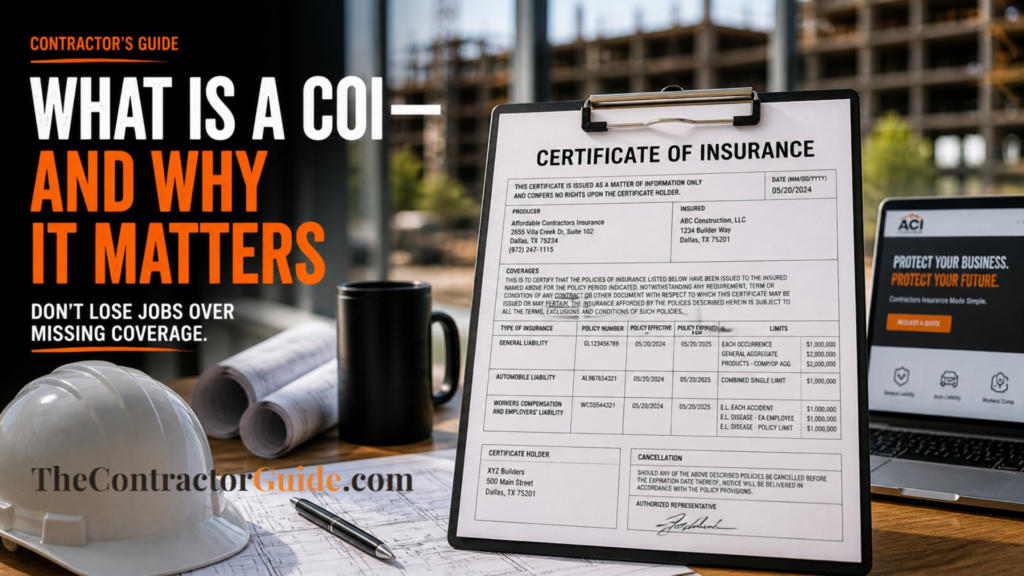
You might think a Certificate of Insurance (COI) is just another piece of paperwork, but it’s actually a crucial document that proves your insurance coverage. Understanding what a COI entails can help you navigate business partnerships and contracts more effectively. It’s not just about compliance; it plays a significant role in risk management. Curious about the essential components and why you need one? Let’s explore that further.
What Is a Certificate of Insurance (COI)?
A Certificate of Insurance (COI) is a vital document that provides proof of insurance coverage. It outlines the types of coverage you have, the policy limits, and the effective dates.
When you’re entering into contracts or partnerships, having a COI shows that you’re responsible and prepared, helping you gain trust from others. This document isn’t just a piece of paper; it’s your assurance that you’re protected in case of unexpected events.
Whether you’re leasing a space, hiring contractors, or participating in community events, sharing your COI can help you feel more connected and secure. It’s a simple way to communicate your commitment to safety and professionalism, reinforcing your place within your community.
Why Do You Need a COI?
You need a Certificate of Insurance (COI) to ensure compliance with legal requirements and protect yourself from potential liabilities.
It acts as a crucial risk management tool, giving you peace of mind in your business dealings.
Without it, you could face serious financial and legal consequences.
Legal Requirement Compliance
While many businesses might overlook it, having a Certificate of Insurance (COI) is crucial for legal compliance. It’s not just a piece of paper; it’s your assurance that you’re meeting industry regulations and protecting your interests.
Many contracts require proof of insurance to show you’re covered in case of unforeseen events. Without a COI, you risk losing contracts, facing fines, or even legal action.
By maintaining a valid COI, you demonstrate professionalism and responsibility, which builds trust with clients and partners. It sends a clear message that you take your obligations seriously.
Risk Management Strategy
Having a Certificate of Insurance (COI) isn’t just about compliance; it’s a key element of your risk management strategy. By securing a COI, you protect yourself and your business from potential financial losses. It shows clients and partners that you’re responsible and trustworthy, fostering stronger relationships.
Here’s a quick look at why a COI matters:
| Benefit | Description | Impact |
| Financial Protection | Covers liabilities and damages | Reduces risks |
| Credibility | Instills trust in clients | Boosts reputation |
| Competitive Advantage | Differentiates your business | Attracts more clients |
| Compliance | Meets legal and contractual obligations | Avoids penalties |
| Peace of Mind | Reduces uncertainty | Enhances focus |
Common Uses for a COI
A Certificate of Insurance (COI) serves as a crucial document in various business transactions, providing proof that a contractor, vendor, or service provider has the necessary insurance coverage.
You’ll often encounter COIs when hiring subcontractors for construction projects, where they assure you that the workers are insured against accidents.
Event planners frequently request COIs from vendors to protect against potential liabilities.
If you’re leasing property, landlords typically ask for a COI to ensure tenants have liability coverage.
Even in partnerships, sharing a COI can build trust and foster collaboration.
Key Components of a COI
When you look at a Certificate of Insurance (COI), you’ll find several key components that matter.
You’ll notice the policyholder information, coverage details, and certificate limits are essential for understanding what the COI covers.
Knowing these elements helps you assess whether the insurance meets your needs.
Policyholder Information
In any Certificate of Insurance (COI), the policyholder information is crucial. It identifies who’s covered under the policy and helps establish trust.
Here are the key components you should look for:
- Name of the Policyholder: This is typically the individual or business that owns the policy.
- Address: The physical address provides a location for correspondence and verification.
- Contact Information: A phone number or email helps others reach the policyholder if needed.
- Policy Number: This unique identifier links the COI to the specific insurance policy, ensuring clarity.
Having accurate policyholder information not only promotes transparency but also fosters a sense of community and security for everyone involved.
Coverage Details
Coverage details are essential in any Certificate of Insurance (COI), as they outline what’s included in the policy. You’ll want to pay attention to the specific types of coverage listed, ensuring they meet your needs. Here’s a quick overview of key components you might find:
| Coverage Type | Description |
| General Liability | Protects against claims of injury or damage to others. |
| Property Coverage | Covers damage to your physical assets. |
| Workers’ Compensation | Provides benefits to employees injured on the job. |
Understanding these components helps you feel secure and informed. When you know what your policy covers, you’re better equipped to navigate risks and protect what matters most to you.
Certificate Limits
Understanding certificate limits is crucial, as they define the maximum amount your insurance will pay in the event of a claim. Knowing these limits helps you feel secure and prepared.
Here are four key aspects to consider:
- General Liability: This covers bodily injury and property damage, ensuring you’re protected in most situations.
- Auto Liability: If you use vehicles for business, this limit safeguards you against accidents.
- Workers’ Compensation: This is vital for protecting your employees in case of work-related injuries.
- Professional Liability: For service providers, this limit covers claims of negligence or mistakes.
Types of Insurance Typically Covered in a COI
While a Certificate of Insurance (COI) serves as proof of various insurance policies, it typically includes several key types of coverage.
Most commonly, you’ll find general liability insurance, which protects you against claims of bodily injury or property damage. If you’re in a profession that requires it, professional liability insurance is also included, safeguarding you from claims related to negligence or errors.
Additionally, workers’ compensation coverage is crucial if you have employees, as it helps cover medical expenses for work-related injuries.
Finally, some COIs include auto liability, protecting against claims from vehicle-related incidents.
Understanding these coverages can help you feel more secure in your business ventures and foster a sense of belonging in your professional community.
Steps to Obtain a Certificate of Insurance
Getting a Certificate of Insurance is straightforward if you follow a few key steps.
First, contact your insurance provider and share the necessary information about your coverage needs.
After that, make sure to review and confirm all the details for accuracy.
Contact Your Insurance Provider
To secure a Certificate of Insurance (COI), you’ll need to reach out to your insurance provider directly. This step is crucial in ensuring you have the coverage you need.
Here’s how to make the process smooth:
- Choose your preferred contact method: Whether it’s a phone call or email, pick what feels right for you.
- Ask for the COI: Don’t hesitate; simply request the certificate and mention its purpose.
- Confirm details: Make sure to discuss any specific coverage requirements or limits you may need.
- Follow up: If you don’t hear back within a reasonable time, reach out again to keep the process moving.
Provide Necessary Information
When you request a Certificate of Insurance (COI), you’ll need to provide specific information to ensure it meets your requirements.
Start by detailing the type of coverage you need, whether it’s general liability, workers’ compensation, or another type.
Next, include the name of the entity that requires the COI, like a client or venue.
Be sure to specify any additional insured parties and the effective dates of coverage.
If there are particular wording or clauses they prefer, mention those too.
Lastly, don’t forget your contact information for any follow-ups.
Review and Confirm Details
After gathering all necessary information, the next step is to review and confirm the details before requesting your Certificate of Insurance (COI). This ensures everything aligns with your needs and expectations.
Here are four key points to double-check:
- Policyholder Information: Verify your name and contact details are correct.
- Coverage Limits: Ensure the coverage amounts meet your requirements.
- Effective Dates: Check that the policy dates are accurate and current.
- Additional Insureds: Confirm any additional parties listed are correct.
Taking the time to review these elements helps you avoid potential issues down the line.
Once you’re satisfied, you’re ready to request your COI with confidence, knowing you’ve set everything up right!
Who Issues a Certificate of Insurance?
Have you ever wondered who’s responsible for issuing a Certificate of Insurance (COI)? Typically, your insurance provider takes on this task. When you purchase a policy, your insurer prepares the COI to confirm that you have the necessary coverage in place.
This document serves as proof for clients, partners, or stakeholders who want assurance that you’re adequately protected. Sometimes, your insurance agent can also help facilitate the issuance, ensuring all details are correct and up to date.
Understanding COI Limits
Understanding the limits of your Certificate of Insurance (COI) is crucial for ensuring you have adequate coverage. Knowing these limits helps you navigate potential risks and protects your interests.
Here are four key COI limits to consider:
- General Liability: This covers bodily injury and property damage, crucial for most businesses.
- Professional Liability: Important if you provide professional services; it protects you against claims of negligence.
- Auto Liability: If you use vehicles for business, this coverage safeguards against accidents.
- Workers’ Compensation: Essential for protecting employees and your business in case of workplace injuries.
Why Accurate COI Information Matters
Accurate information on your Certificate of Insurance (COI) is vital for effective risk management. When you provide precise details, it fosters trust between you and your clients or partners.
They rely on your COI to assess their exposure to risk, and any inaccuracies can lead to misunderstandings or financial setbacks.
Having the right coverage limits, policy dates, and insured parties ensures everyone knows what’s protected, creating a sense of security.
This clarity not only strengthens your professional relationships but also enhances your reputation in your industry.
Differences Between a COI and Other Insurance Documents
When you’re reviewing insurance documents, it’s crucial to understand how a Certificate of Insurance (COI) differs from other types, like insurance policies and endorsements.
A COI provides a snapshot of coverage, while policies offer detailed terms and conditions.
Comparing it to binders can also clarify how these documents serve different purposes in your insurance landscape.
COI Versus Insurance Policy
While you might think a Certificate of Insurance (COI) and an insurance policy are the same, they serve different purposes. Understanding these differences helps you navigate your insurance needs effectively. Here’s what sets them apart:
- Purpose: A COI provides proof of insurance coverage, while an insurance policy outlines the terms of coverage.
- Detail: The COI summarizes key details, whereas the insurance policy contains extensive information on exclusions and limits.
- Usage: You use a COI to show proof to clients or partners; you refer to your insurance policy for claims and coverage specifics.
- Length: A COI is typically one page, while an insurance policy can be lengthy and complex.
Knowing these distinctions can empower you in your insurance journey.
COI And Endorsements Explained
Understanding the differences between a Certificate of Insurance (COI) and endorsements is crucial for managing your insurance documents effectively. A COI is a snapshot of your insurance coverage, showing proof to clients or partners that you have the necessary protection in place. It highlights key details like policy limits and effective dates.
On the other hand, endorsements are amendments or additions to your insurance policy. They modify the coverage, either expanding or limiting it based on specific needs.
While the COI provides a general overview, endorsements dive deeper into the specifics of what’s covered or changed. Knowing these distinctions helps you communicate clearly and maintain trust within your network, ensuring everyone’s on the same page regarding your insurance status.
COI Compared To Binders
A Certificate of Insurance (COI) often gets compared to other insurance documents, particularly binders. While both serve important roles, they’ve key differences you should know.
- Purpose: A COI proves you have insurance coverage, while a binder provides temporary coverage until a policy is finalized.
- Duration: COIs typically last for the policy term, whereas binders are short-term and can expire quickly.
- Details: COIs summarize essential policy information, while binders include more detailed terms and conditions.
- Usage: You’ll often need a COI for contractual obligations, but binders are mainly for transitional periods.
Understanding these differences helps you navigate your insurance needs and ensures you’re adequately covered when it matters most.
How Long Is a COI Valid?
How long is a Certificate of Insurance (COI) valid? Generally, a COI remains valid for the duration specified in the insurance policy it represents. This could be anywhere from a few months to a year, depending on the coverage type. It’s essential to keep track of expiration dates to ensure you’re always protected.
Here’s a quick overview of COI validity:
| Coverage Type | Typical Validity Period |
| General Liability | 1 year |
| Auto Insurance | 6 months to 1 year |
| Workers’ Comp | 1 year |
| Professional Liability | 1 year |
Staying on top of your COI’s validity helps you maintain trust and security in your business relationships. You’re part of a community that values transparency!
Next Steps After a COI Expires
When your Certificate of Insurance (COI) expires, it’s important to take immediate action to maintain your coverage and protect your business interests. Here’s what you should do next:
- Review Your Policies: Check your existing insurance coverage to understand what’s needed for your operations.
- Contact Your Agent: Reach out to your insurance agent or broker to discuss renewal options and any changes in your needs.
- Gather Required Information: Prepare any necessary documentation or information that your insurer may require for the renewal process.
- Request a New COI: Once renewed, make sure to request a new COI and provide it to any parties that require proof of insurance.
Taking these steps ensures you stay covered and maintain trust with your partners.
How to Update Your COI
Updating your Certificate of Insurance (COI) is essential to ensure your coverage reflects your current needs.
Start by reviewing your existing policy to identify any changes in your business or personal circumstances. Next, contact your insurance provider and discuss the updates you require. They’ll guide you through the process and may suggest adjustments to better align with your goals.
Be clear about your needs, whether you’re adding coverage, changing limits, or including new entities. Once the updates are made, request a new COI to confirm your revised coverage.
Finally, share the updated document with anyone who needs it, like clients or partners. Staying current with your COI fosters trust and security within your community.
FAQs About Certificates of Insurance
Ever wondered what a Certificate of Insurance (COI) really entails? You’re not alone! Many people have questions about this important document. Here are some common FAQs to consider:
- What’s the purpose of a COI? It shows proof of insurance coverage to clients or partners.
- Who needs a COI? Typically, contractors, freelancers, and businesses require one for various projects.
- How long is a COI valid? It usually covers a specific period, often aligning with project timelines.
- Can I get a COI for different types of insurance? Absolutely! You can obtain COIs for general liability, workers’ compensation, and more.
Understanding these points can help you navigate the world of insurance with confidence and clarity.
Tips for Requesting a COI From Your Insurer
Requesting a Certificate of Insurance (COI) from your insurer can be straightforward if you follow a few key tips.
First, be clear about why you need the COI. Specify the project or requirement to help your insurer understand your needs.
Next, gather all necessary details, like policy numbers and coverage types, to streamline the process.
Don’t hesitate to ask your insurer about their typical turnaround time for COIs, as this can vary.
If you’re working with multiple insurers, keep a checklist to avoid confusion.
Finally, follow up politely if you don’t receive it in the expected timeframe.
Conclusion
In summary, a Certificate of Insurance (COI) is crucial for protecting your business and building trust in partnerships. Did you know that nearly 40% of small businesses face a major liability claim each year? Having a COI can help mitigate those risks and ensure you’re covered when unexpected events occur. So, make sure you obtain and maintain your COI to safeguard your interests and foster professionalism in your dealings.