Workers’ compensation isn’t just another insurance line item—it’s part of how serious contractors protect their operations, their crews, and their ability to win work.
If you’re running projects, hiring crews, or scaling across states, understanding workers’ comp is critical. Done right, it protects your business. Done wrong, it can cost you contracts, margins, and credibility.
Why Contractors Need Workers’ Compensation Insurance
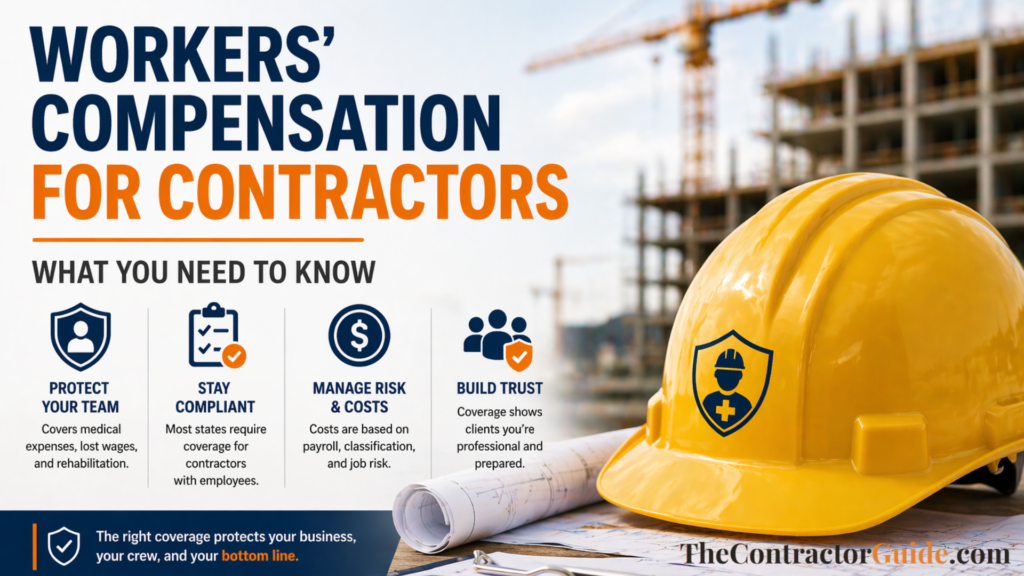
Workers’ compensation insurance covers medical expenses, lost wages, and legal exposure if someone gets injured on the job.
For contractors, this isn’t optional in most cases—it’s foundational.
Without it, you’re exposed to:
- Out-of-pocket medical costs
- Lawsuits from injured workers
- Project shutdowns due to non-compliance
More importantly, clients expect it. Many contracts won’t even let you start work without proper coverage in place.
If you’re unsure whether your current setup is structured correctly, it’s worth reviewing your coverage with a specialist.
State Requirements: What Actually Applies to You
Workers’ compensation is regulated at the state level, not federally.
That means:
- Requirements vary depending on where you operate
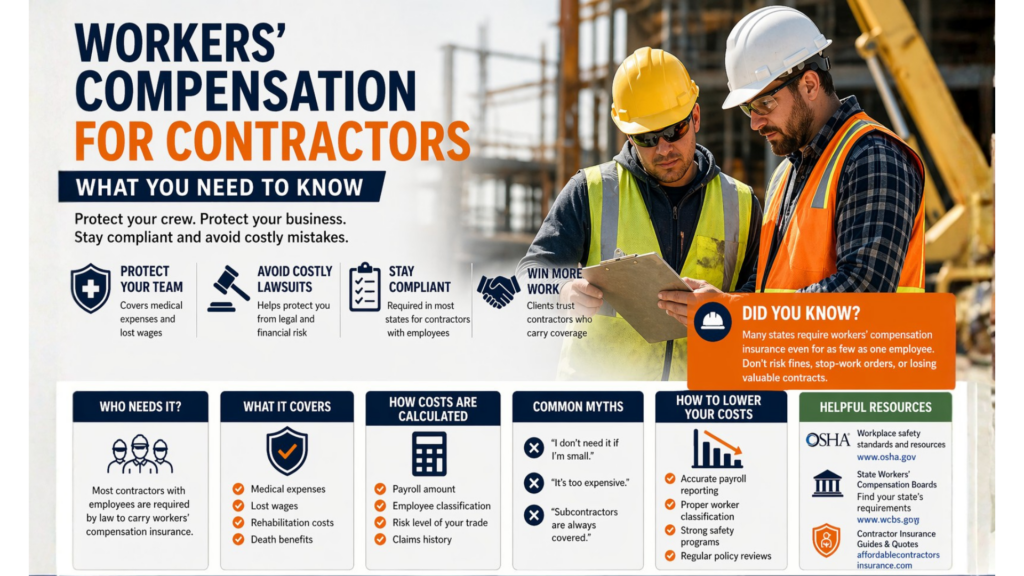
- Some states require coverage even for a single employee
- Others have exemptions for certain contractor types
Federal agencies like Occupational Safety and Health Administration focus on safety standards—not insurance requirements.
To stay compliant, you should:
- Check your state’s workers’ comp board
- Understand employee thresholds
- Verify subcontractor coverage rules
If you’re operating across multiple states, this gets even more complex—and more important.
Contractors vs Employees: Why Classification Matters
One of the biggest mistakes contractors make is misclassifying workers.
Here’s the difference:
Contractors
- Control their own schedule and work methods
- Handle their own taxes
- Typically carry their own insurance
Employees
- Work under your direction
- Have taxes withheld
- Must be covered under your workers’ comp policy
Misclassification can trigger:
- Premium audits
- Back payments
- Legal penalties
It’s one of the fastest ways to overpay—or get burned later.
Common Myths About Workers’ Compensation
Let’s clear up a few things:
“I don’t need it if I’m small.”
Wrong. Many states require coverage even for small crews.
“It’s too expensive.”
Not necessarily. Most overpaying comes from bad classification—not the policy itself.
“Subcontractors are always covered.”
Only if they carry their own valid insurance—and you verify it.
This is where working with a contractor-focused broker matters. A properly structured policy can save thousands annually.
Types of Coverage Contractors Should Understand
Workers’ comp doesn’t exist in isolation—it’s part of a broader insurance structure.
You should also understand:
- General Liability Insurance
Covers third-party injuries and property damage - Commercial Auto Insurance
Covers work vehicles and jobsite transport risks - Umbrella / Excess Coverage
Extends limits across multiple policies
If these aren’t aligned, gaps can appear—especially on larger projects.
How Workers’ Compensation Costs Are Calculated
Your premium is based on a few key factors:
- Total payroll
- Employee classification codes
- Risk level of your trade
- Claims history
High-risk trades (roofing, framing, concrete) pay more—but that doesn’t mean you should be overpaying.
A misclassified policy can inflate costs significantly. Fixing classification alone often leads to major savings.
How to Choose the Right Workers’ Comp Policy
Not all policies are built the same.
Here’s what to focus on:
1. Accurate Classification
Make sure your work is coded correctly—this is where most errors happen.
2. Coverage That Matches Operations
Your policy should reflect what you actually do—not what someone guessed.
3. Strong Carrier + Claims Handling
Fast, reliable claims processing matters when something goes wrong.
How Safety Programs Reduce Claims (and Costs)
Safety isn’t just about compliance—it directly impacts your premiums.
Strong safety programs help:
- Reduce accidents
- Lower claim frequency
- Improve experience modification rates
Key strategies:
- Regular safety audits
- Job-specific training
- Clear reporting systems
A safer crew = fewer claims = lower long-term costs.
What to Do After a Workplace Injury
If an injury happens:
- Get medical attention immediately
- Report the incident internally
- Document everything (details, witnesses, timeline)
Fast, accurate reporting helps protect both your employee and your business.
How to File a Workers’ Compensation Claim
The process is straightforward—but timing matters:
- Report the injury
- Gather documentation (medical + incident reports)
- Submit the claim to your insurer
Delays or missing information can slow everything down.
How Workers’ Comp Impacts Your Business
Workers’ comp isn’t just protection—it’s positioning.
Proper coverage:
- Builds trust with clients
- Helps win larger contracts
- Keeps operations running smoothly
Poor coverage:
- Leads to rejected certificates
- Causes project delays
- Exposes you to financial risk
In today’s market, insurance is part of your operational infrastructure—not just a requirement.
How to Lower Your Workers’ Comp Costs
You don’t just accept your premium—you manage it.
Focus on:
- Accurate payroll reporting
- Proper worker classification
- Strong safety programs
- Regular policy reviews
Most contractors overpay because no one revisits their structure.
Exemptions: Do They Apply to You?
Some contractors may qualify for exemptions:
- Sole proprietors without employees
- Certain industries depending on the state
- Low-revenue thresholds in some jurisdictions
But relying on exemptions without verifying them can backfire quickly.
Always confirm with your state requirements before opting out.
Helpful Resources for Contractors
If you want to go deeper:
- Occupational Safety and Health Administration – Workplace safety standards
- State Workers’ Compensation Boards – Local compliance rules
- https://affordablecontractorsinsurance.com/ – Contractor-focused insurance guidance
What Makes a Strong Workers’ Compensation Policy?
A solid policy should:
- Cover all employees appropriately
- Align with your actual operations
- Include medical, wage, and rehab benefits
- Be backed by a responsive carrier
Most importantly—it should be built specifically for contractors, not generalized across industries.
Final Takeaway
Workers’ compensation isn’t just about checking a box.
It’s about:
- Protecting your crew
- Staying compliant
- Structuring your business to scale
Get it right, and it becomes a competitive advantage.
Get it wrong, and it becomes a liability.