If you’re a contractor, risk isn’t occasional—it’s built into the job.
Every project site carries exposure. A client could get injured. Property could be damaged. A simple mistake could turn into a lawsuit. And when that happens, it’s not just the job at risk—it’s your entire business.
That’s where general liability insurance comes in. It’s not just a checkbox or a requirement—it’s foundational protection for how contractors operate today.
What General Liability Insurance Actually Covers
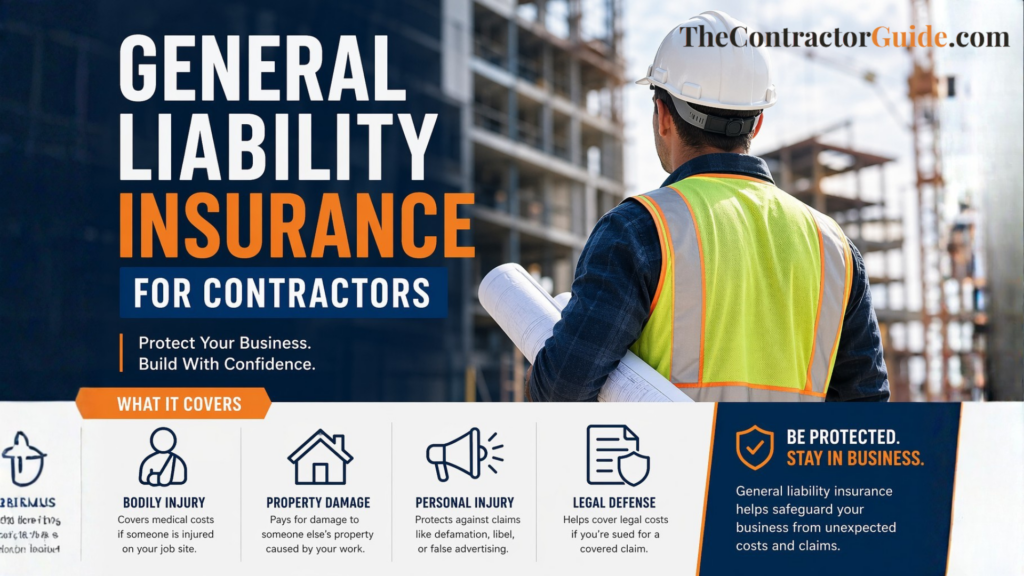
At its core, general liability insurance is designed to protect contractors from third-party claims.
This typically includes:
- Bodily injury (someone gets hurt on your job site)
- Property damage (you or your crew damage someone else’s property)
- Personal and advertising injury (claims like defamation or false advertising)
For example, if a client trips over materials and gets injured, your policy can cover medical expenses and legal costs. If your work damages part of a structure, it can help pay for repairs.
This is the baseline coverage most contractors need just to operate—and in many cases, it’s required before you can even step onto a job.
Why General Liability Insurance Is Non-Negotiable
Contractors aren’t just evaluated on price anymore.
Developers, general contractors, and project owners are reviewing insurance in detail. If your coverage doesn’t align with contract requirements, you can lose the job before it even starts.
General liability insurance helps you:
- Protect against lawsuits and legal expenses
- Cover unexpected property damage costs
- Meet contractual insurance requirements
- Build credibility with clients and partners
Without it, one claim can wipe out months—or years—of work.
The Core Coverage Areas You Need to Understand
Bodily Injury Protection
Covers injuries to third parties on your job site. This includes medical bills, legal defense, and potential settlements.
Property Damage Coverage
Handles costs when your work or operations damage someone else’s property—whether it’s a client’s building, a rented space, or adjacent structures.
Personal Injury Protection
Covers non-physical claims like defamation, false advertising, or reputational harm.
These aren’t edge cases—they’re common exposures in construction.
How It Actually Protects Your Business
General liability insurance isn’t just about paying claims—it’s about keeping your business operational.
When something goes wrong, it can:
- Cover legal defense costs (which add up fast)
- Pay settlements or judgments
- Prevent out-of-pocket financial hits
- Protect your assets and cash flow
It allows you to keep working instead of getting stuck dealing with financial fallout.
Common Misconceptions Contractors Get Wrong
A lot of contractors misunderstand what general liability insurance does—and doesn’t do.
Here’s where mistakes happen:
- It doesn’t cover everything (like professional errors or faulty workmanship)
- It’s not just for large companies—small contractors need it just as much
- It’s not always expensive—cost depends heavily on how your policy is structured
Misunderstanding coverage is one of the main reasons contractors end up underinsured.
How Much Coverage Do You Actually Need?
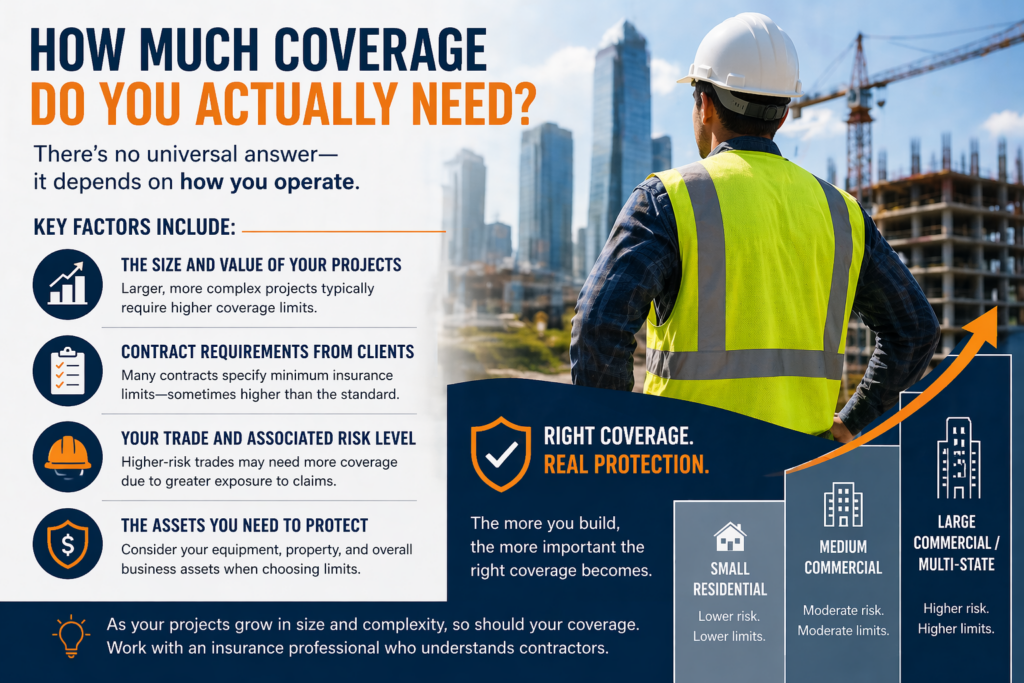
There’s no universal answer—it depends on how you operate.
Key factors include:
- The size and value of your projects
- Contract requirements from clients
- Your trade and associated risk level
- The assets you need to protect
If you’re working on larger commercial jobs or multi-state projects, your coverage needs will be significantly higher than a small residential contractor.
What Affects Your Insurance Premium
Your cost isn’t random—it’s based on risk.
Insurance carriers typically evaluate:
- Your trade (roofing vs. painting vs. general contracting)
- Business size and revenue
- Claims history
- Location and job types
- Number of employees or subcontractors
Higher-risk operations naturally come with higher premiums—but structuring your policy correctly can make a major difference.
If you want to understand how pricing actually works and how to structure your policy correctly, you can explore this breakdown of Affordable Contractors Insurance’s approach to general liability coverage.
What General Liability Insurance Doesn’t Cover
This is just as important as what it does cover.
Most policies exclude:
- Professional errors (covered under professional liability)
- Damage to your own work
- Employee injuries (workers’ comp handles this)
- Intentional acts
- Certain subcontractor-related risks
If you don’t understand these gaps, you’re exposed—even if you think you’re covered.
Subcontractors and Liability (Where Things Get Risky)
Subcontractors can create major exposure if not handled properly.
If they’re uninsured—or improperly insured—you could be held responsible for their mistakes.
Best practices include:
- Always verifying subcontractor insurance
- Requiring proper endorsements
- Clearly defining responsibilities in contracts
- Monitoring compliance continuously
This is where a lot of claims originate.
How to Choose the Right Insurance Provider
Not all insurance policies are structured the same—and that’s where contractors run into problems.
When comparing providers, focus on:
- Coverage depth (not just price)
- Exclusions and limitations
- Claims handling reputation
- Ability to structure policies around contracts
The cheapest policy is rarely the one that actually works when you need it.
Ways to Lower Your Insurance Costs
You don’t have to overpay—but you do need to be intentional.
To reduce premiums:
- Maintain a clean claims history
- Invest in safety processes and training
- Structure your business correctly (especially subcontractors)
- Bundle coverages when it makes sense
- Work with specialists who understand contractor risk
A properly structured policy can save thousands annually.
Final Thoughts
General liability insurance isn’t just protection—it’s infrastructure.
It determines whether you get approved for jobs. It affects how clients view your business. And when something goes wrong, it decides whether you recover—or take a major hit.
The contractors who win long-term aren’t just the best builders.
They’re the ones who understand risk—and structure their coverage to match how they actually operate.